

Can one supplier reliably match bright, fresh tomato flavor with industrial predictability?
الفرسان introduces Cold Break (CB) High Brix tomato paste solutions for buyers and processing factories in Egypt and beyond. We serve importers and food manufacturers who need consistent specs, full documentation, and short lead times to keep production on schedule.
Our CB product range includes CB 36–38 Brix, made from 100% tomato with no additives, packed in sterile aseptic steel drums (230 kg) and engineered for up to 24 months shelf stability under recommended storage.
Expect a COA per batch, ERP traceability, and certification alignment with FSSC/ISO/HACCP and NFSA requirements. Shipments are handled from Alexandria or Damietta under FOB/CFR/CIF terms. We provide samples, TDS, and COA packs to speed technical approval and line qualification.
Ready to discuss specs, request samples, or place an order? Contact our technical sales team: phone +2 0101 010 8 99 3. Audit-ready COAs and traceability records are available with every shipment.
Key Takeaways
- Cold Break tomato paste Egypt — CB high Brix CB 36–38 Brix for bright, pourable systems with excellent flavor and color retention.
- 100% tomatoes, no additives; aseptic tomato paste packed in sterile steel drums (230 kg), 24-month stability.
- Full quality compliance (FSSC/ISO/HACCP), COA per batch and ERP traceability to speed approvals.
- Short lead times (10–15 days) with shipments from Alexandria or Damietta under FOB/CFR/CIF — reliable supply for manufacturers.
Service Overview for Importers and Food Factories Seeking Cold Break High Brix
Food manufacturers and procurement teams sourcing cold break tomato paste Egypt need suppliers who pair consistent product specs with dependable supply and documentation. Al Fursan is a cold break tomato paste exporter offering CB 36–38 Brix concentrates tailored for ketchup, light sauces, ready meals, soups, and beverage bases — focused on consistent solids, bright flavor, and line-friendly viscosity.
Documentation is supplied per batch: COA, ERP traceability, and certifications (FSSC, ISO, HACCP, NFSA alignment) to reduce customs friction and accelerate private‑label qualification. COA + ERP traceability help lower the risk of import holds and speed approval cycles.
Aseptic steel drums (230 kg) integrate into standard decanting workflows and reduce contamination risk. Typical lead time is 10–15 days with FOB/CFR/CIF terms to match your logistics and freight planning. Ask our team about MOQs and sample policies for drums versus canned tomato paste formats.
Buyers often first meet suppliers at SIAL, Anuga, and Foodex, where packaging, certifications, and private‑label services are evaluated. Al Fursan supports pre‑shipment inspections, buyer coding, and vendor onboarding to simplify qualification.
“We support pre-shipment inspections, buyer coding, and vendor onboarding to simplify qualification.”
- CB 36–38 Brix: higher solids for improved yield and freight efficiency; requires controlled dilution and slightly higher pump torque during reconstitution.
- Technical support for CB reconstitution curves, viscosity targets, Bostwick testing, serum separation, and flavor benchmarks.
- Contact sales for samples, TDS, micro specs, MOQs, and draft shipping plans aligned with your production slots.
What Cold Break (CB) Processing Means for Tomato Paste Performance
Cold Break describes a lower‑temperature approach during initial thermal treatment that protects volatile aroma compounds and the fresh‑acid balance. For tomato paste, CB preserves bright fruit character while providing a lighter, line‑friendly body ideal for pourable formulations such as ketchup, light sauces, and beverage bases.
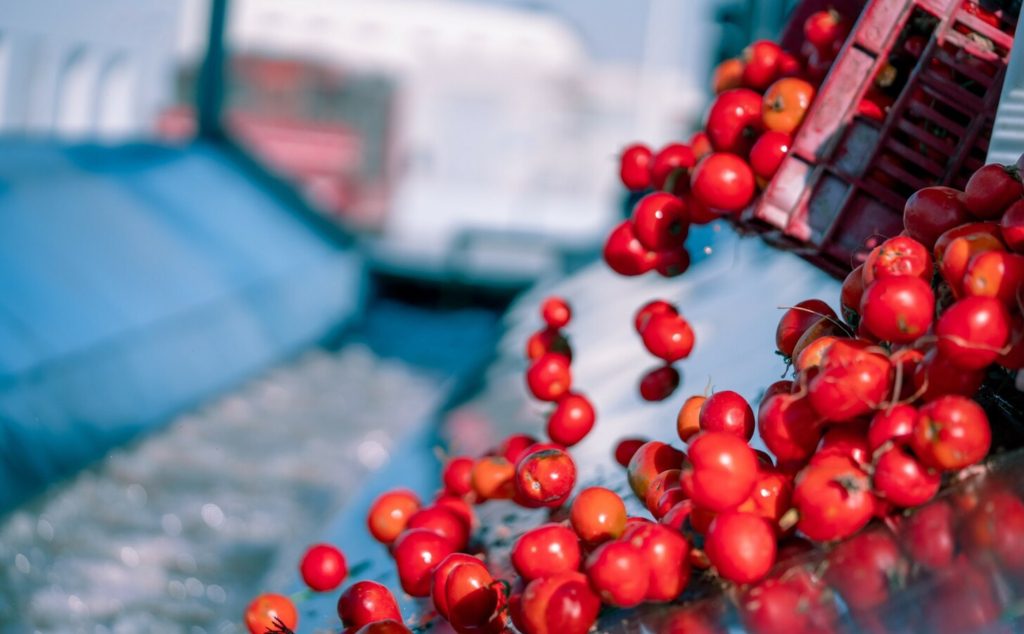
Temperature window and enzyme activity that preserve fresh notes
CB uses a reduced heat window so native enzymes and volatile aromatics are less degraded. This preserves brighter tomato taste and fresher acid balance compared with more aggressive thermal regimes. (For customer‑facing technical sheets, request our validated CB temperature/hold ranges and enzyme activity data.)
Viscosity, color retention, and seed/skin management in CB lines
Because CB limits pectin set‑up during initial heating, finished concentrates display a lighter body and improved pumpability. Careful deaeration, rapid cooling, and controlled oxygen exposure reduce oxidative darkening and help retain vibrant color. Fine screening and multi‑stage filtration remove seeds and skin fragments to deliver low speck counts and a clean mouthfeel for downstream blending.
Typical QC checks we provide include Bostwick flow, serum separation, and a/b color metrics so you can verify reconstitution behavior on your line.
How CB supports clean label and short‑heat exposure matrices
CB aligns with clean‑label goals: shorter thermal impact combined with 100% tomato inputs supports minimal ingredient statements. Aseptic filling — where product and container are sterilized separately and assembled in a sterile environment — secures ambient shelf stability while protecting CB sensory targets.
- HACCP controls set critical limits for temperature, hold time, and aseptic filling to ensure safety and repeatable quality.
- Routine in‑process and finished tests (Bostwick, serum separation, micro limits, color) verify product performance and are included on request with TDS/COA.
“CB concentrates deliver a noticeable lift in fresh tomato taste while remaining line‑friendly for high‑throughput, pourable applications.”
Request a technical pack to receive validated CB processing ranges, enzyme/pectin activity data, and practical reconstitution targets (e.g., suggested dilution and target Bostwick ranges) so R&D can model your production runs.
Selecting the Right Cold Break (CB) Grade for Your Product
Process choice shapes aroma, body, and how a formula behaves on the line — this guidance focuses exclusively on Cold Break (CB) performance and grade selection.
Cold Break (CB) preserves fresh aromatics and yields a lighter body suited to pourable systems. CB maintains bright tomato flavor and often reduces the need for added thickeners in ketchup, light sauce, soup bases, beverage blends, and other pourable applications.
Choosing CB by application and Brix
Match the CB 36–38 Brix grade to your target viscosity, flavor profile, and thermal budget. Begin with desired flow rates and sensory goals, then verify how CB 36–38 Brix performs in your application to limit reformulation and optimize cost-in-use.
- CB 36–38 Brix: higher solids for improved yield and freight efficiency; requires controlled dilution and slightly higher pump torque during reconstitution.
- Pilot trials: verify shear stability, acid balance, and color retention through your downstream processes (retort, HTST, or kettle cook).
“Run CB pilot trials on your line to confirm texture and flavor before scaling to full production.”
| Attribute CB 36-38 Brix | ||
| Flavor | Bright, fresh | Bright, slightly fuller due to higher solids |
| Body / Viscosity | Light, pourable | Denser when concentrated; controlled dilution yields target pourability |
| Best use | Ketchup, light sauces, beverage bases, soups | Central kitchens, bulk reconstitution, applications where yield matters |
| Reconstitution note | Lower pump torque, faster dispersion | Requires staged dilution and higher pump torque; recommend inline mixing |
Procurement note: Choose CB grade by the combination of your target Bostwick, required solids yield, and line handling limits. Consult our technical sales to receive recommended reconstitution ratios, target Bostwick ranges, and a suggested pilot size (50–200 kg pilot recommended) for CB 28–30 and CB 36–38.
Next step: Request CB sample drums and a pilot plan so R&D can confirm viscosity curves, Bostwick targets, and flavor retention under your production conditions.
Understanding High Brix CB 36-38 Concentrations for Industrial Formulation
A concentrate’s soluble solids control viscosity, yield, and how much water you must add during production.
Soluble solids and how Brix drives sweetness, body, and yield
Brix measures soluble solids that determine perceived sweetness, body, and yield. Procurement and R&D teams use Brix to forecast cost‑in‑use across SKUs and market channels when sourcing cold break tomato paste Egypt. Monitor Bostwick, color (a/b), and serum separation to verify that reconstitution delivers consistent sensory outcomes on your line.
When to specify CB 28–30 vs CB 36–38 for target viscosity and cost‑in‑use
Choose CB 28–30 Brix for medium viscosity targets where fast hydration and easy pumpability are priorities — common in ketchup, light sauces and ready meals. Choose CB 36–38 Brix when higher solids are needed to reduce water carry, save tank space, and lower freight per finished case for central kitchens and bulk formulation.
“Higher Brix reduces transport weight but requires R&D to model reconstitution, line speed, and cost‑in‑use.”
- CB 36–38 Brix: efficient for central production and bulk reconstitution where storage density and yield per ton matter; staged mixing and higher pump torque are typical.
- Packaging note: aseptic drums are preferred for industrial dosing; tins/cans serve retail SKUs and smaller kitchens.
| Decision FactorCB 28–30 BrixCB 36–38 Brix | ||
| Typical use | Ketchup, light sauces, pasta & beverage bases | Central kitchens, bulk reconstitution, high‑yield lines |
| Line handling | Lower shear, faster hydration | Controlled dilution required, higher pump torque |
| Cost drivers | More water carry, lower concentrate price | Higher concentrate price, lower freight per case |
| QC focus | Bostwick, color, serum separation | Bostwick, color, reconstitution curve |
Reconstitution examples (typical starting points)
- CB 28–30 Brix: begin with 1:2 to 1:3 concentrate:water by weight, target Bostwick range to be agreed with R&D based on final SKU.
- CB 36–38 Brix: staged dilution (pre‑wet then final mix) is recommended; initial trials often use 1:4 to 1:5 overall dilution to reach finished solids—confirm with pilot.
Be prepared: request TDS, COA, micro specs, and sample drums (CB 28–30 and CB 36–38) so R&D can validate viscosity curves, flavor retention, and finished stability at pilot scale. Plan FIFO storage and adequate space allocation to protect concentrate performance in production.
Industrial Applications for CB Tomato Concentrate
Industrial kitchens and contract manufacturers choose CB concentrate when they need a bright, fresh note that survives downstream thermal processing and blends easily on high‑throughput lines.
Ketchup and light sauces that keep a fresh profile
CB concentrate gives ketchup and light sauce formulas a fresh, bright character. Using CB‑28–30 Brix delivers pourability and sheen; CB‑36–38 Brix raises solids for yield while keeping brightness. In many formulations CB reduces the need for heavy thickeners and helps achieve target Bostwick flow with lower shear.
Ready meals, soups, and beverage bases
Ready meals and soups benefit from a lighter body that balances spoon feel and mouth‑coating. CB preserves acidity and volatile notes that help finished products read as fresher after retort or cook cycles. Beverage bases use CB to add a clean fruit lift without dense body, easing blending into fluid systems.
Operational benefits and format guidance
CB disperses quickly in mixing tanks, lowers shear load, and shortens cycle times in large kettles — improving batch homogeneity and speeding production. For industrial dosing, aseptic drums (190–220 kg) with sterile liners are the preferred packaging for efficient handling and ambient storage.
- Use CB to preserve fresh tomato flavor in pasta and pizza sauces after thermal steps.
- Run pilot trials to confirm Bostwick, serum separation, and finished stability on your line.
- Request samples and pilot drums (we recommend 1–2 drums for initial trials) so R&D can validate performance in your recipes.
| ApplicationKey BenefitSuggested CB Brix | ||
| Ketchup | Bright flavor, controlled pourability | CB 28–30 |
| Light sauces | Fast dispersion, reduced cook time | CB 28–30 |
| Soups / Ready meals | Balanced texture, consistent spoon feel | CB 28–36 |
| Beverage bases | Clean lift, easy blending | CB 28 |
Next step: For samples, TDS, or technical trials, contact our sales and technical team to arrange CB sample drums (CB 28–30 and CB 36–38), COA documentation, and a pilot plan. We’ll propose suggested reconstitution ratios, target Bostwick ranges, and a trial scope aligned to your production needs.
Al Fursan Product Specifications: CB, High Brix, Aseptic, No Additives
Cold Break (CB) processing with targeted high‑Brix grades gives formulators a predictable performance profile for bright aroma and controlled viscosity.
Process: Cold Break (CB) offered in two high‑Brix SKUs — CB 28–30 Brix and CB 36–38 Brix — engineered for pourable systems and efficient reconstitution in industrial lines.
Composition: 100% tomatoes with no additives, supporting clean‑label claims and simple ingredient statements on finished goods.
Packaging: aseptic steel drums (190–220 kg) fitted with sterile liners. Aseptic filling sterilizes product and container separately and fills in a sterile environment to allow ambient shelf storage and safe decanting into process tanks.
Shelf life: 24 months when kept under recommended conditions; rotate stock FIFO and avoid temperature extremes to preserve color and aroma.
Documentation & quality: COA issued per batch with ERP‑backed traceability. Certifications include FSSC, ISO frameworks, HACCP plans, and NFSA alignment to support audits, private‑label approvals, and global buyer requirements.
Logistics & lead times: Typical lead time 10–15 days. Shipments from Alexandria or Damietta on FOB, CFR, or CIF terms. Contact our team for TDS, pilot drums, FCL/LCL pricing, and MOQs.
| AttributeSpecificationBenefit | ||
| Process | Cold Break — CB 36–38 Brix | Bright tomato flavor, controlled viscosity for pourable applications |
| Composition | 100% tomatoes, no additives | Clean label, straightforward formulation |
| Packaging | Aseptic steel drums 230 kg (sterile liners) | Ambient storage, efficient industrial decanting |
| Traceability | COA per batch; ERP records | Audit ready, fast lot lookup |
“Consistent CB specs, audit‑ready COAs, and clear logistics reduce qualification time and help manufacturers protect production schedules.”
Quality Assurance and Certifications for Global Compliance
Al Fursan maintains an integrated quality system that links certification, line validation, and batch records to meet global buyer requirements. This framework helps procurement and technical teams qualify cold break tomato paste exporters quickly and with confidence.
Certificates that support buyer audits
FSSC 22000, ISO frameworks, and HACCP plans form the core of our food safety approach. We also align operations with national regulator expectations such as NFSA to simplify local approvals and support international market entry.
Aseptic standards and shelf stability
Aseptic processing sterilizes product and container separately and fills in a sterile environment. This approach secures ambient shelf stability without preservatives while preserving CB sensory targets for aseptic tomato paste supplied in industrial drums.
Documentation that speeds import approvals and private‑label checks
Every batch ships with a COA plus ERP‑backed traceability from raw material receipt through finished drums. Buyers receive a full compliance pack on request: specification sheets, micro results, allergen declarations, GMO status, and copies of certification documents to support audits and private‑label launches.
- Certification stack: FSSC, ISO, HACCP plans, and NFSA alignment to meet retailer and regulator expectations.
- Traceability: Batch COA and ERP records for fast due diligence and lot lookup.
- Audit readiness: multi‑year audit history and third‑party verification to support buyer qualification.
“Request the full compliance pack early in the sourcing cycle to avoid timeline pressure before production.”
| ItemBenefitHow it helps | ||
| FSSC / ISO | Systemic quality | Global retailer acceptance and supplier onboarding |
| HACCP | Risk control | Protects safety and CB sensory targets via defined critical limits and verification points |
| COA / ERP | Traceability | Faster import clearance and private‑label onboarding; COA includes Brix, pH, micro results and key QC metrics |
To request the compliance pack or validate certificate status and expiry dates, contact our quality team; typical turnaround for standard documentation requests is provided on enquiry.
Packaging, Handling, and Storage for Aseptic Tomato Paste
Choosing the right packaging reduces downtime, protects quality during dosing and batching, and influences landed cost and handling on busy production floors.
Industrial drum format vs retail options
Aseptic drums (190–220 kg) fitted with sterile liners are designed for high‑volume lines: they support ambient storage, simplify decanting into process tanks, and reduce contamination risk. These drums are the preferred packaging for industrial dosing of aseptic tomato paste and other tomato products.
By contrast, tins, glass jars, sachets, and cups suit retail and small kitchens. Canned tomato paste and canned tomato formats are useful for low‑volume use but add handling and portioning time on fast production floors.
Storage, opening, and partial‑use best practices (quick SOP)
Store drums in a cool, dry area away from direct sunlight. Keep pallets off the floor and follow FIFO to protect aroma, color, and shelf life.
Opening and decanting — recommended steps:
- Verify drum identity and COA before opening.
- Sanitize tools, valve fittings, and the surrounding area; use a clean opening station.
- Use controlled‑pierce valves or sterile decant systems to minimize air ingress.
- Transfer contents to sanitary tanks with dedicated hoses and inline filters where required.
- If partial use is unavoidable, reseal with sanitary caps, minimize headspace, label with open date, and plan rapid drawdown (use within the factory’s defined working life).
HACCP‑aligned controls: document post‑opening SOPs and environmental checks, use dedicated drum lifters and clean hoses, and schedule regular audits of storage areas to ensure compliance.
- Sanitation: maintain documented cleaning records for decant equipment.
- Environmental monitoring: verify storage conditions and micro environment near drum storage.
- Handling: use drum lifters and decant skids to reduce contamination risks and ergonomic incidents.
| FormatBest useKey benefit | ||
| Aseptic drums | Industrial dosing | Lower contamination risk, fewer container changes, ambient storage |
| Tin / can | Retail & small kitchens | Convenient portioning and shelf presentation |
| Glass / jars / sachets | Specialty or retail | Consumer appeal and small‑batch control |
“Proper handling preserves product performance, reduces downtime, and keeps lines running.”
Procurement note: ask your account manager for MOQs by packaging type and for recommended storage temperature and humidity ranges to support the 24‑month shelf life claim. For assistance with drum opening SOPs or to request sample handling kits, contact our technical team.
Logistics From Egypt: Lead Times, Ports, and Incoterms
Shipments from Egypt are coordinated to fit production slots and buyer timelines. We support global planning and can tailor routing to your freight program and service‑level agreements.
Lead time: Confirm operational readiness with a 10–15 day lead time from order confirmation to shipment readiness. This timing supports procurement calendars and production schedules; allow additional buffer during peak harvest and shipping seasons.
Ports of loading: Primary gateways are Alexandria and Damietta, offering broad carrier coverage and container options to match buyer route preferences and consolidation needs.
Trade terms: We offer FOB, CFR, and CIF to fit different logistics strategies, insurance frameworks, and landed cost models.
- Documentation accuracy and speed — commercial invoice, packing list, COA, and certificates — to reduce customs delays and demurrage risk.
- Supply planning support — forecast collaboration, slot reservations, split shipments, and consolidated booking for multi‑SKU orders to protect supply and timing.
- Pricing transparency tied to Incoterms, fuel surcharges, and seasonality to help lock predictable budgets and landed price.
- Pre‑shipment inspections and third‑party audits are compatible with our vendor assurance program.
“Buyers often use SIAL, Anuga, and Foodex to discuss routing, consolidation, and delivery windows.”
For detailed routing proposals, carrier options, or to set up a shipment plan that protects product and price, contact our logistics team. We can provide tailored quotes, ETAs for sample shipments versus full loads, and suggested lead‑time buffers by market to help you model supply and cost accurately.
tomato paste exporters: Positioning Al Fursan Among Leading Suppliers
Buyers select tomato paste exporters that combine consistent lots, transparent price models, and reliable shipping lanes — Al Fursan is positioned as a cold break tomato paste exporter delivering on those priorities.
How Egyptian capabilities compare globally
Egypt provides scale, access to local raw material, and coastal ports that shorten transit to Europe, Africa, and the Middle East.
Al Fursan pairs these national advantages with robust QA systems (FSSC 22000, ISO frameworks) and strict HACCP execution so manufacturers and private‑label teams can trust lot‑to‑lot consistency in solids, color, and micro limits.
Trade shows and sourcing hubs shaping buyer discovery
Meetings at SIAL, Anuga, and Foodex accelerate qualification. Procurement, quality, and R&D teams use these events for side‑by‑side trials of canned tomato paste, canned tomato formats, puree, and aseptic tomato paste — and to review packaging and certification packs.
| CapabilityBenefitNotes | ||
| Certification & QA | Retail and foodservice acceptance | FSSC, HACCP, COA per batch |
| Packaging options | Fit for factories and retail | Aseptic drums, canned tomato paste, glass |
| Logistics | Reliable on‑time supply | Alexandria & Damietta ports; flexible Incoterms |
| Commercial terms | Predictable cost‑in‑use | Transparent pricing, COA, and supply planning |
“Schedule meetings around major shows to shorten qualification cycles and align trial timelines. Ask for sample drums, COA packs, and MOQs in advance.”
Cold Break Tomato Paste Egypt Keywords and Sourcing Considerations
Selecting the right Cold Break high‑Brix grade starts with defining your SKU goals for flavor, yield, and line speed. Use the guidance below to evaluate market fit when sourcing cold break tomato paste Egypt from a trusted cold break tomato paste exporter.
CB high Brix tomato paste exporters Egypt and market fit
Assess suppliers by certification stack, COA turnaround, and packaging options. Look for FSSC, ISO, HACCP, and NFSA alignment that supports private‑label and retail buyers. Verify COA details, micro limits, and ERP traceability to reduce qualification time and import risk.
Inspect packaging choices: aseptic drums suit industrial lines; canned formats meet retail demand. Attend SIAL, Anuga, or Foodex to benchmark manufacturers and suppliers side‑by‑side and to review canned tomato and canned tomato paste samples and COA packs.
CB 36-38 Brix: selecting the right High Brix concentrate for your SKU
CB 36-38 Brix offers higher solids for improved yield, better freight efficiency, and reduced water carry — but requires controlled reconstitution and slightly higher pump torque during blending. This grade is ideal for central production lines, bulk formulation, and applications where solids density and cost-per-finished-case matter most.
| FactorCB 28–30 BrixCB 36–38 Brix | ||
| Yield / price impact | Moderate yield; lower concentrate cost per ton | Higher yield per ton; better freight efficiency |
| Viscosity | Lower; fast dispersion | Higher; requires staged dilution |
| Best for | tomato sauce, puree, retail sauces | central production, bulk reconstitution, high‑yield lines |
CB concentrate and aseptic tomato paste for private label
Private‑label buyers should request full documentation bundles: COA, micro limits, allergen declarations, and ERP traceability logs. MOQs for canned lines typically run higher than for industrial aseptic drums — confirm with sales.
- Ask for analytics: Brix, pH, color, Bostwick, serum separation, and microbiological results.
- Confirm branding, labeling, and shelf‑life terms for canned tomato and canned tomato paste SKUs.
- Check lead times from Alexandria/Damietta and chosen Incoterms to model landed price and risk allocation.
“Request samples and a tailored price and supply proposal to validate cost‑in‑use on your line.”
Procurement checklist & next steps
- Request CB sample drums (CB 36–38), TDS, and COA.
- Confirm MOQs, packaging options, and sample shipping costs with the exporter.
- Run a 1–2‑drum pilot to validate reconstitution, Bostwick targets, and finished stability.
- Obtain a tailored supply and price proposal including transit estimates from Alexandria/Damietta and Incoterm pricing.
For samples, specs, and a tailored supply and price proposal, contact Al Fursan to arrange pilot drums and documentation.
Conclusion
A reliable supply partner delivers tested CB grades, transparent documentation, and the shipment cadence your factory requires.
Cold Break processing preserves bright, fresh tomato character and yields a lighter body ideal for ketchup, light sauces, soups, beverage bases, and select pasta profiles.
CB 36–38 Brix delivers bright, fresh tomato character and a lighter body ideal for ketchup, light sauces, soups, beverage bases, and select pasta profiles, with excellent yield and freight efficiency.
Al Fursan supplies 100% tomatoes with no additives in aseptic steel drums (230 kg), offering 24-month shelf life, COA per batch, ERP traceability, and full certifications. Lead time is typically 10–15 days from Alexandria or Damietta under FOB/CFR/CIF terms. Aseptic format supports ambient storage and protects quality for industrial use.
For trials, TDS/COA packs, and pricing, contact our technical sales to arrange pilot drums and a tailored supply proposal. Contact sales: +2 0101 010 8 99 3 or use our Request a Quote page.